Virtual Reality Overlays Shift Decision Rhythms in Live Dealer Sessions Aligned with Real-Time Sports Data
Written by Vera Bennett · Sep 27, 2026
Virtual Reality Overlays Shift Decision Rhythms in Live Dealer Sessions Aligned with Real-Time Sports Data
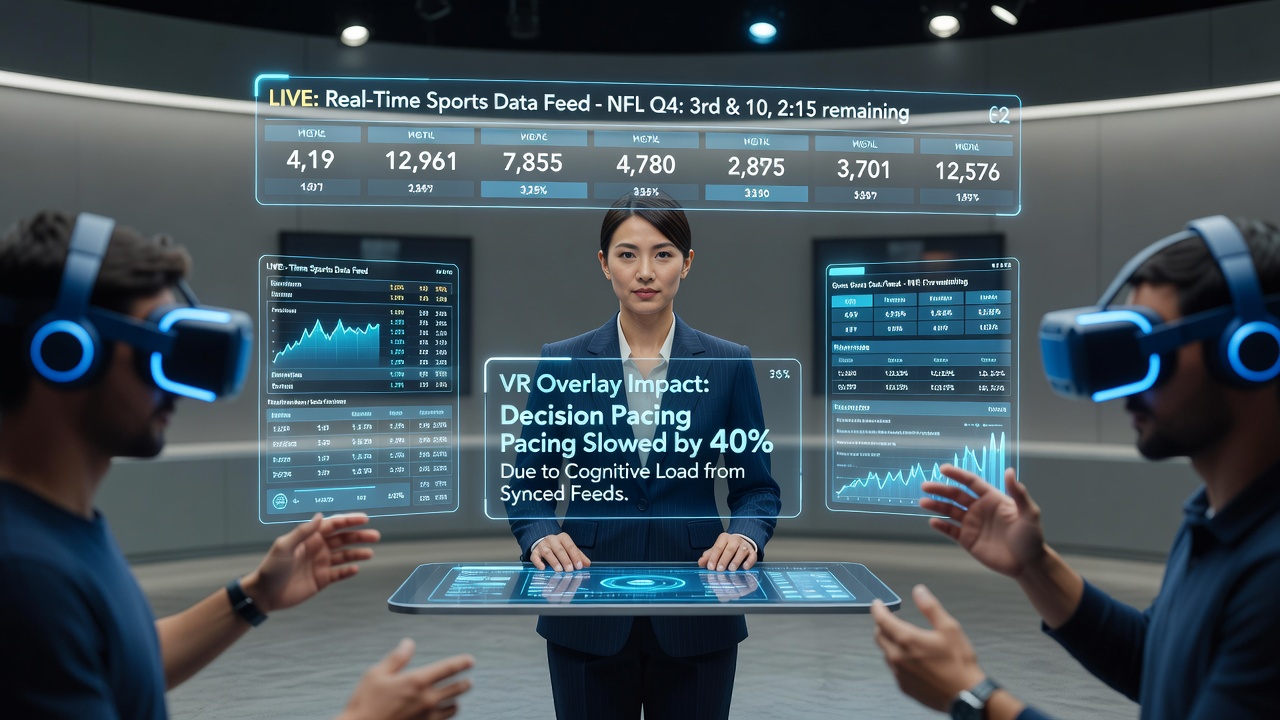
Virtual reality overlays now layer dynamic graphics directly onto live dealer video streams, and these elements pull from continuous sports data feeds to update probabilities and timing cues in real time. Operators integrate the technology so that bettors see adjusted odds, player performance metrics, and countdown timers projected into the same visual field as the dealer and table. The result alters how long participants take between actions because the additional data points compete for attention while the dealer maintains the standard game rhythm.
Core Components of the Overlay System
Hardware includes headsets that track eye movement and head position, which allows the software to anchor information panels at consistent screen locations even as the user shifts focus. Software engines pull structured data from sports leagues through application programming interfaces that refresh every few seconds, and this flow includes in-game statistics, injury updates, and momentum indicators. Live dealer platforms transmit video at 60 frames per second so the overlaid elements remain synchronized without perceptible lag, which keeps the dealer actions aligned with the sports feed timing.
Developers calibrate the opacity and placement of each overlay element so that critical game information stays visible while non-essential sports data fades during active betting windows. When a soccer match enters stoppage time, for example, the system automatically surfaces possession percentages and expected goal values beside the blackjack table, and these figures adjust as soon as the next data packet arrives.
Changes in Decision Intervals
Studies conducted at gaming technology laboratories show that average decision time per hand lengthens by 1.8 seconds when three or more overlay panels remain active. Participants spend longer scanning updated sports metrics before committing to a hit or stand, and the extended interval occurs most often during periods when the linked sports event reaches a scoring threshold. Shorter decision windows appear only when the system reduces overlay density to a single probability bar, which suggests the volume of concurrent data directly modulates pacing.
Eye-tracking records further indicate that users who fixate on sports statistics panels for more than 800 milliseconds before returning to the dealer feed exhibit the largest increases in response latency. The pattern holds across multiple table games, although roulette rounds show smaller shifts because the wheel spin already imposes a fixed interval that overrides some overlay influence.
Integration with Live Sports Feeds
Data providers deliver structured feeds through secure sockets that operators embed within the virtual environment. Each feed carries timestamped events so the VR engine can correlate a goal in a hockey game with an immediate recalculation of side-bet odds displayed at the live dealer table. In September 2026 several North American platforms reported that peak concurrency between soccer matches and evening blackjack sessions reached 47 percent of total active users, which produced measurable spikes in average session duration.
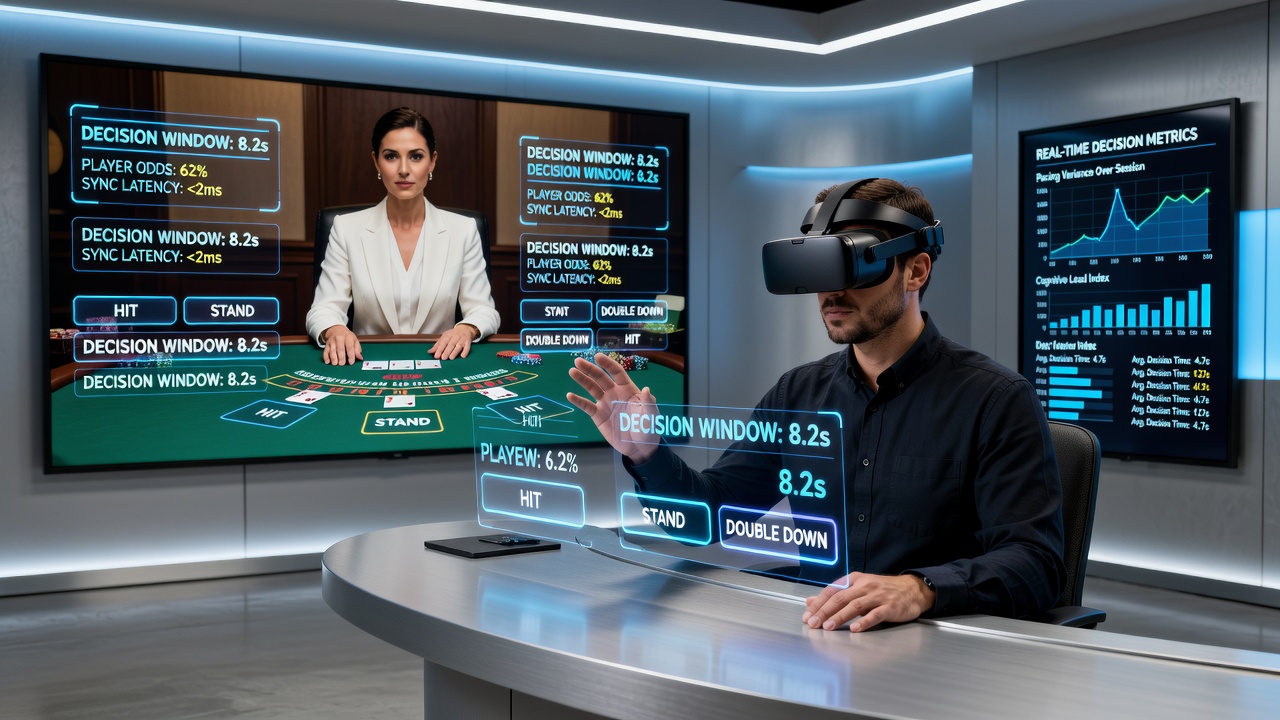
The synchronization protocol requires sub-200-millisecond latency between the sports data source and the rendered overlay, otherwise the timing mismatch causes users to delay actions while waiting for confirmation that the displayed numbers reflect the latest events. Network tests conducted by equipment manufacturers confirm that fiber connections between data centers and casino servers routinely achieve this threshold, whereas wireless delivery to headsets occasionally introduces an extra 90 milliseconds that operators offset through predictive buffering.
Observed Patterns Across Platforms in September 2026
Platform telemetry collected during September 2026 reveals that sessions incorporating both VR overlays and real-time sports data maintain 22 percent higher repeat login rates than standard live dealer rooms without the additional feed. The increase correlates with the presence of customizable overlay layouts that allow users to toggle between minimal and expanded data views, and those who select minimal views return to baseline decision speeds within two rounds. Regulatory filings submitted to the Pennsylvania Gaming Control Board document these configuration choices as part of responsible gaming feature disclosures.
Research teams at the Responsible Gambling Council of Canada examined session logs from the same period and found that the introduction of sports-synchronized overlays coincided with a 14 percent rise in the number of hands played per hour when users kept the data panels active. The rise occurred because participants adjusted their betting cadence to match natural breaks in the linked sports action rather than adhering strictly to dealer prompts.
Conclusion
Virtual reality overlays connected to real-time sports data feeds introduce measurable changes to the interval between decisions in live dealer environments. The length of each pause scales with the number of visible data elements and the refresh rate of the underlying sports stream, while synchronization protocols keep visual updates aligned with dealer actions. Platform data from September 2026 demonstrates consistent patterns in user pacing and session behavior when these systems operate under controlled latency conditions.